
Roughly a year ago, the citizens' council "AI and Freedom" met and exchanged views on the role society could play in AI-research and the support of it. Additionally, they discussed the way AI influences our individual and societal freedom.
To the RHET AI Center and especially the Unit 4 (Public Engagement, responsible for the idea and organisation of the citizens' council "AI and Freedom"), this council was an important project, not only in its execution but also in its preparation and the subsequent debriefings.
We interviewed a few colleagues who were involved in various ways in the initial idea and later execution of the citizens' council about their experiences regarding the project. By answering 3 questions, they are allowing us a glimpse into one central topic each which encapsulated them during the process, based on their expertise and their learnings following the course of the project as well.
Today we continue with Oliver Häußler (Center for Media Competence, University of Tübingen), who spoke to us about communication with regard to public engagement projects.
Interview with Oliver Häußler
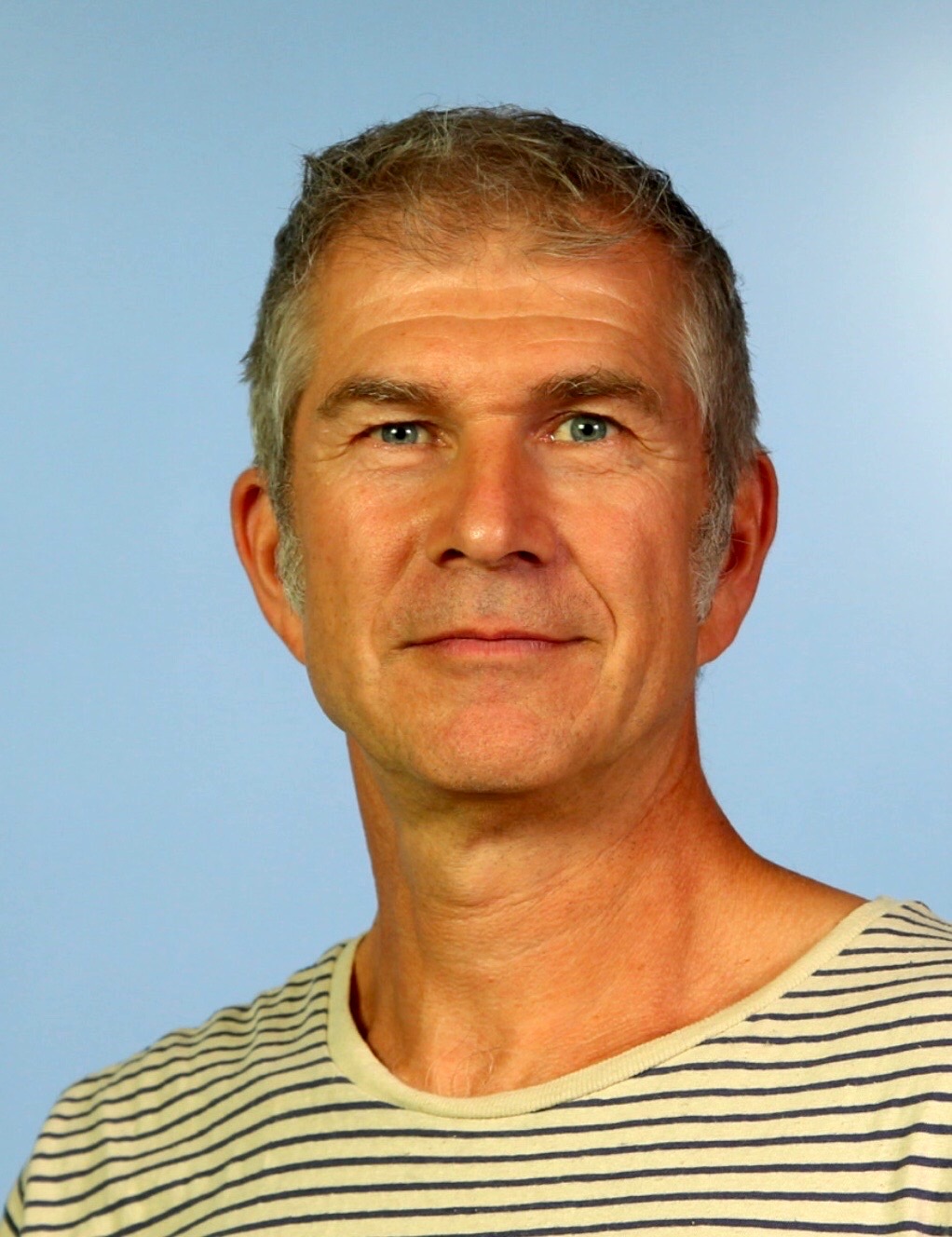
Oliver Häußler works at the Center for Media Competence at the University of Tübingen, where his responsibilities include strategic consulting for science communication, the Public Engagement Hub, and CampusTV.
As a representative of university communications, he was also involved in communications surrounding the Citizens' Council "AI and Freedom" and shared his expertise with the organizing team. We asked him about communication strategies in public engagement projects and the Citizens' Council:
To what extent is public communication about a large-scale project, in this case a citizens' council, crucial to the course and success of the project?
Oliver Häußler: Even before public communication, one thing is particularly important: early internal communication with all project participants. Before a project such as a citizens' assembly even begins, the following questions should be answered: "What are the specific goals of the project? What impact is it intended to have on society and politics, as well as within the university? Who benefits from such a citizens' assembly and who is it for? And which potential supporters of the project should I address internally?" Only once the impact goals have been validly identified can I look further at what resources I need to achieve these goals.
The second step would be to communicate with external partners involved in the project, for example: How do I communicate with the implementing agency in such a way that everyone involved understands what the project goals are?
The third communicative step would then be to consider allies in the area of impact and find advocates here: in the case of the citizens' council, for example, this would be minister Olschowski or the president of the University of Tübingen, Prof. Dr. Pollmann, who would communicate the significance and potential of this citizens' council for society, politics, and the university itself to the outside world.
Only when these things have been clarified can you be sure about what to communicate publicly through your own channels. Only then would it be the right time for me to go public. You can now assess what the press and media representatives want to know about this project on the one hand, and what information citizens need to decide to participate in the council on the other. It must be clearly communicated what the project is about, what citizens can contribute, and what the benefits are, but also: How much time will be required? What are the potential obstacles? This is to prevent people from saying in the middle of the process, "This is not what I imagined at all, I'm out." Communicating realistic and transparent expectations management is helpful for success.
In all of this, it is important that there is internal consensus on what you want to communicate externally. And that you anticipate possible questions or objections that may arise: This allows me to assess the possible consequences of my communication and develop scenarios to respond appropriately.
In summary, public communication requires thorough preparation: clear messages and coordination within the team, as well as a well-thought-out concept. Only then do the practical tools come into play—such as creating press distribution lists, identifying multipliers, or addressing relevant stakeholders in politics and society.
The participants in citizens' councils come from very different areas of society and bring with them different perspectives, interests, and objectives. What challenges does this pose, and how can this diversity of perspectives be managed?
Oliver Häußler: For me, this is primarily a mindset issue: as a person with a university background, being clear about your own role and how you can affect someone without this academic background. Ultimately, we also have a habitus that can be dismissive and create misunderstanding. It is helpful to send fewer messages and instead simply listen and learn about the needs, fears, or uncertainties of the people participating in the citizens' council. Participants may also express views that differ from what you already know. You have to be open to this and be able to listen. And the second point is not to judge statements. Those who judge elevate themselves above others.
Only when you manage to do that does the diversity that you have created through structural techniques in the selection of participants really unfold. Then you also have to accept people who may have political views that you personally disagree with. They too can provide important input that could be exciting for the citizens' council and that you may not have considered yet. You don't have to agree with each other, but you should at least understand how others arrive at certain opinions and attitudes. And that's a lot of communication work and also demands a lot personally. Especially from researchers who are used to sending their messages.
As an external communicator, you need professional distance and role awareness: you don't act as your own person with your own views, but are professionally responsible for communication and thus also for the best possible success of the project.
Do you have any advice for future projects similar to the Citizens' Council?
Oliver Häußler: In many cases, projects at the university involve early consideration of the concept, implementation, and resources of a project. However, communication, which is central to the success of a project both before and during its duration and even after its completion, is often given secondary consideration. This is where I would see a lack of strategy. The focus is often on communicating the results at the end. And that is precisely my advice: that communication should always be considered at a very early stage and not left until the end. A communication strategy must be in place right from the start.
Then, of course, resource allocation is always a big issue. Communication costs money, resources, and time. Experience shows that researchers find it difficult to consider and plan for this. I have noticed this in many research projects. Everyone would like to have a website, an explanatory film, or something similar, but often there is no separate communication budget planned for precisely such things. I think it's important to plan resources for communication from the outset and to recognize that communication is a very important element for success. Communication is not something you can just do on the side. This often leads to a dual role that you cannot always fulfill because you are perhaps more of a researcher than a communicator. A project is only fully successful when the communication of the project has been successful.
A big thanks to Oliver Häußler for sharing his insights into strategic communication around projects like the Citizens' Council "AI and Freedom."
If you’d like to read the previous interviews in this series:
- First up was Patrick Klügel (RHET AI Center Unit 4, Public Engagement Manager at the University of Tübingen), who we interviewed about expectation management.
Click here for the interview with Patrick Klügel.
- The second interview was with Anika Kaiser (RHET AI Center Unit 4), who spoke to us about epistemic injustice and her research in connection with the Citizens' Assembly on AI and Freedom.
Click here for the interview with Anika Kaiser.


