
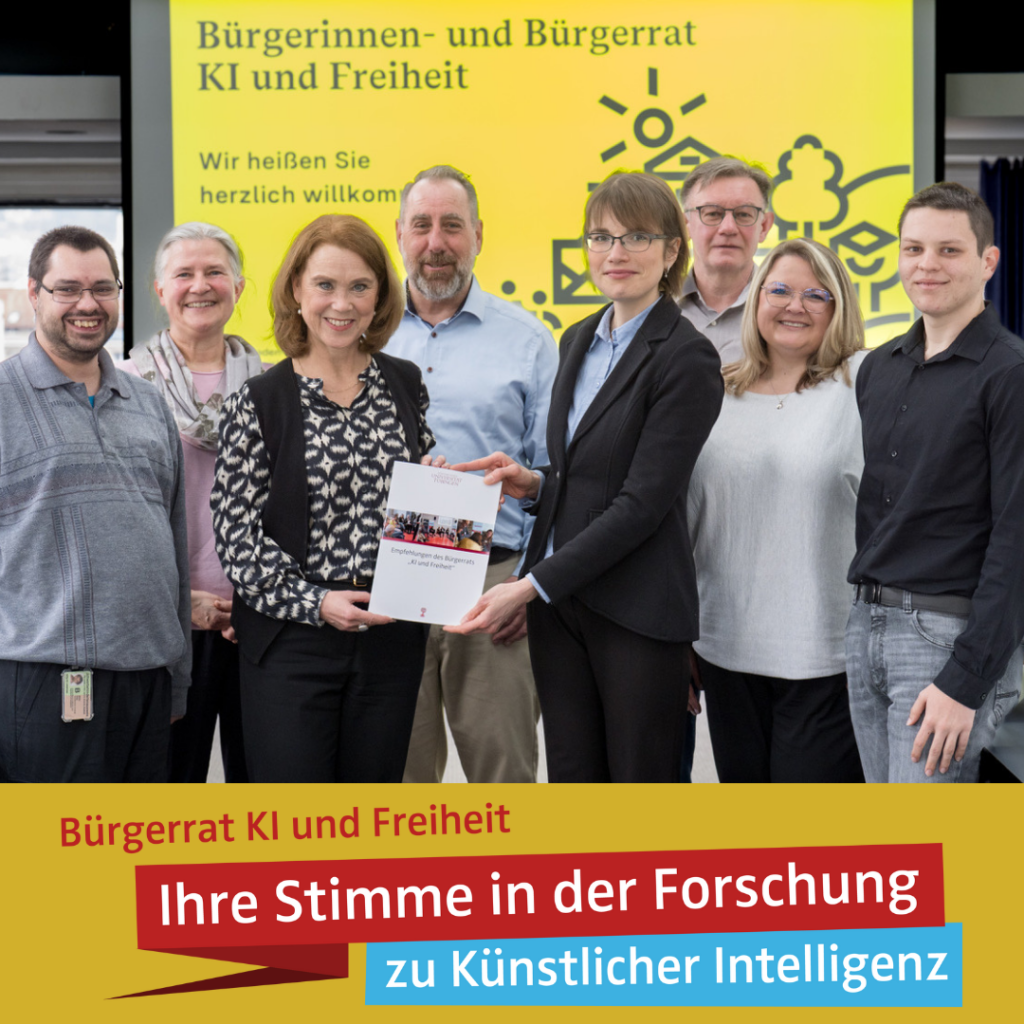
Today in Stuttgart, the Citizens' Assembly "AI and Freedom" presented its recommendations on citizen participation in AI research to Petra Olschowski, Minister of Science for Baden-Württemberg. Among other things, the 40 randomly selected citizens are calling for secure infrastructures for data donations, a collection point for topic suggestions for AI research, and a permanent citizens' assembly on the use of traffic data for better mobility management.
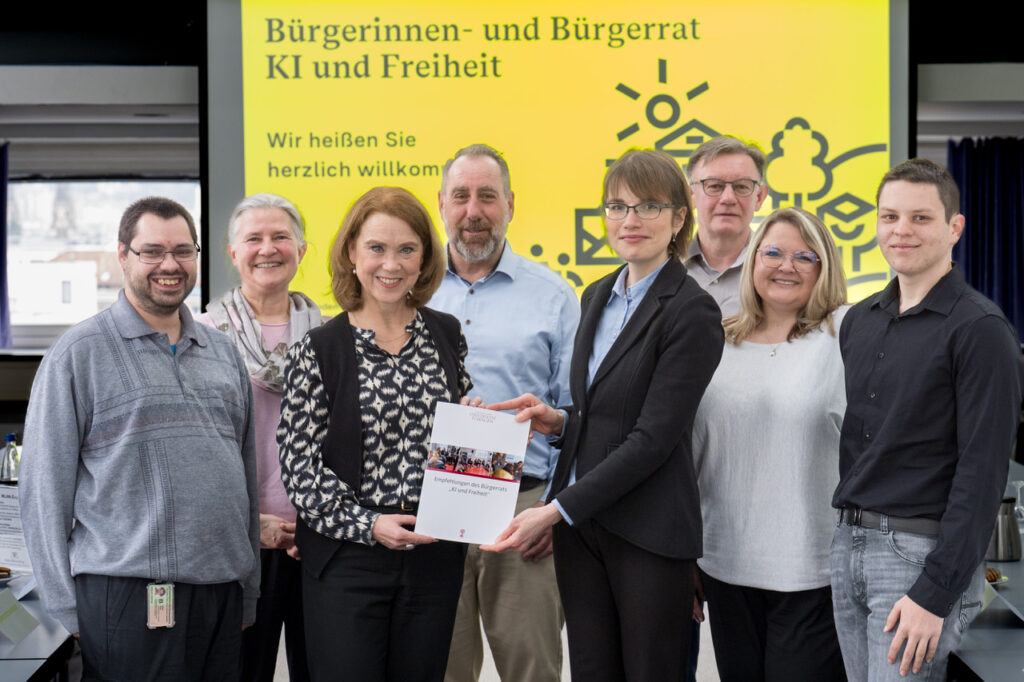
Photo: Wolfram Scheible, University of Tübingen.
Citizens demand transparent AI research
In addition to structural proposals, the Council also advocates for greater transparency in science communication. Among other things, it calls for easily understandable formats such as AI fairs, discussion panels, and open house events to strengthen interest and trust in AI research.
Impressive Commitment
Minister Olschowski was impressed by the citizens' commitment and emphasized the importance of social support for AI research.
The rector of the University of Tübingen, Professor Dr. Dr. h.c. (Dōshisha) Karla Pollmann, also underscored the importance of such participatory formats: "Technological innovations must be accompanied by innovations in participation." Numerous offerings have been developed around RHET AI, including as part of the University of Tübingen's public engagement strategy.
The forty participants were selected at random from four municipalities of different sizes in Baden-Württemberg – from large cities to rural areas. In four sessions from September to December 2024, they discussed with ethicists, AI experts, and users to develop recommendations. The video [German audio only] provides insights:
Policy paper with recommendations published
All recommendations and detailed documentation of the council meetings are compiled in a policy paper [German version], which can be downloaded here:
The official handover of the recommendations does not mark the end of the Citizens' Council process. The results and impact of the project will be documented on an ongoing basis on the website www.buergerrat-ki.de. The next step will be to discuss the recommendations with the Cluster of Excellence "Machine Learning for Science", the Cyber Valley Public Advisory Board, and the Volkswagen Foundation.
"The great thing about this citizens' councilwas that, regardless of our educational qualifications, everyone was listened to and everyone could contribute something. That's a feeling you don't often get in society."


