

The year 2025 marks the end of a successful, intense, and very active year for the RHET AI Center. Before we turn our attention to the new ideas, encounters, and challenges that await us in 2026, we would like to take a look back at some of the highlights of the past year.
However, instead of recapping everything in detail month by month, we want to keep this review of 2025 very personal—told by those who helped shape this year. Before we focus on the individual highlights of our team members, however, it is worth taking a brief look at a few milestones that had a particular impact on us in 2025.
A key moment was the presentation of the policy paper containing the recommendations of the Citizens' Council on AI and Freedom to the Baden-Württemberg Minister of Science, Research, and the Arts, Petra Olschowski, and state politicians. After an intensive participation process, the jointly developed ideas for citizen-oriented, responsible AI research were officially presented—an important step toward bringing social perspectives more strongly into political decision-making processes. More information is available here:
👉 https://rhet.ai/2025/03/10/buergerrat-uebergibt-empfehlungen-fuer-buergernahe-ki-forschung/
Another highlight was the launch of our AI escape game for school students. With "AI – we have a problem!", we have created a playful, low-threshold learning format that promotes AI competence and at the same time encourages students toengage critically with technology. The escape game was not only very well received in schools, but also demonstrated how effective innovative educational formats can be:
The end of the year was marked by one of the biggest events in the history of RHET AI: the transformativ Conference in December, which we were able to organize together with experimenta in Heilbronn. For two days, everything revolvedaround transformation, science communication, and the question of how research can have a social impact—an intensive exchange that provided many new ideas:
👉 https://www.experimenta.science/transformativ/
In addition to these major milestones, 2025 was rich in other special moments: for example, there was an inspiring workshop with Mike Schäfer in Tübingen, which opened up new perspectives on science communication. We also launched ourseries of workshops for Volkshochschulen, with the aim of teaching AI skills for work and everyday life. In October, the new journalist in residence, Christoph Koch, began his stay in Tübingen, combining journalistic approaches with everyday research on artificial intelligence. Also, the RHET AI was part of a panel at the Science Communication Forum 2025.
At the same time, our established formats such as I'm a Scientist and Junior Science Café AI, which have been running since 2022 in cooperation between Wissenschaft im Dialog and the RHET AI Center, as well as Artificial Friday, our online colloquium on linguistic perspectives on artificial intelligence, continued successfully. Our colleagues gave numerous lectures and workshops, published articles (→ list of publications), participated in panel discussions, established new networks–and pursued their individual research projects with great dedication. Many of these were featured in our video series "Ein Blick in" (A Look Into…) this year, which provides insights into all five units and the research fields of the respective team members.
With so many highlights, big and small, it is of course difficult to choose just one special moment from this year. Nevertheless, we asked our team members to do just that and send us a picture of their personal RHET AI highlight of the year, along with a short explanation of what made that moment so special:
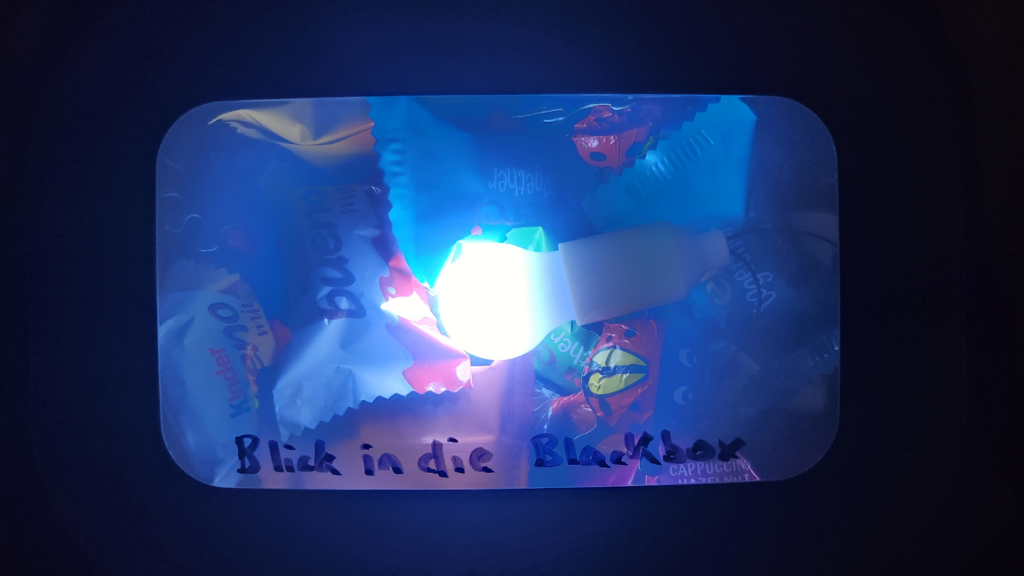
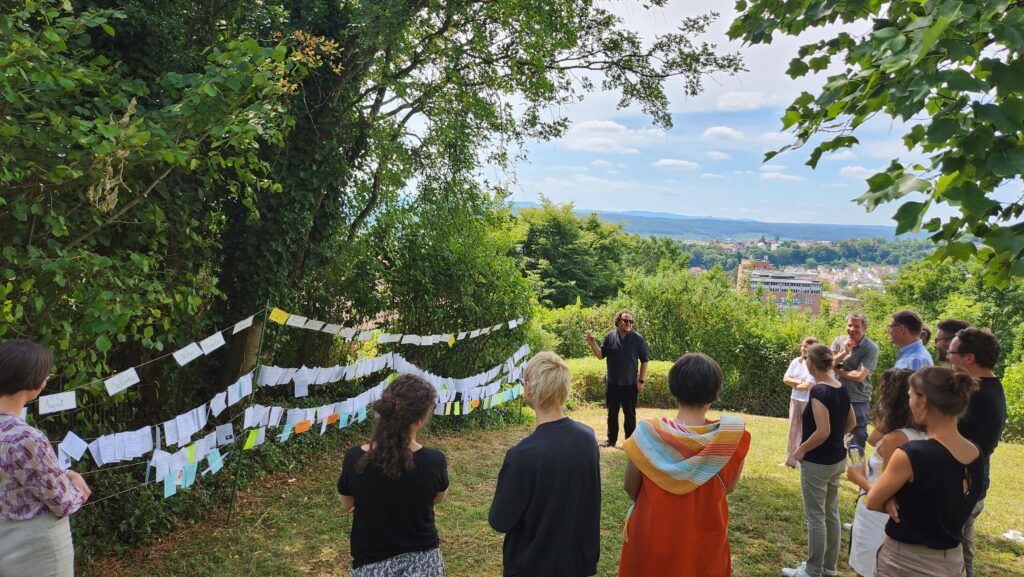
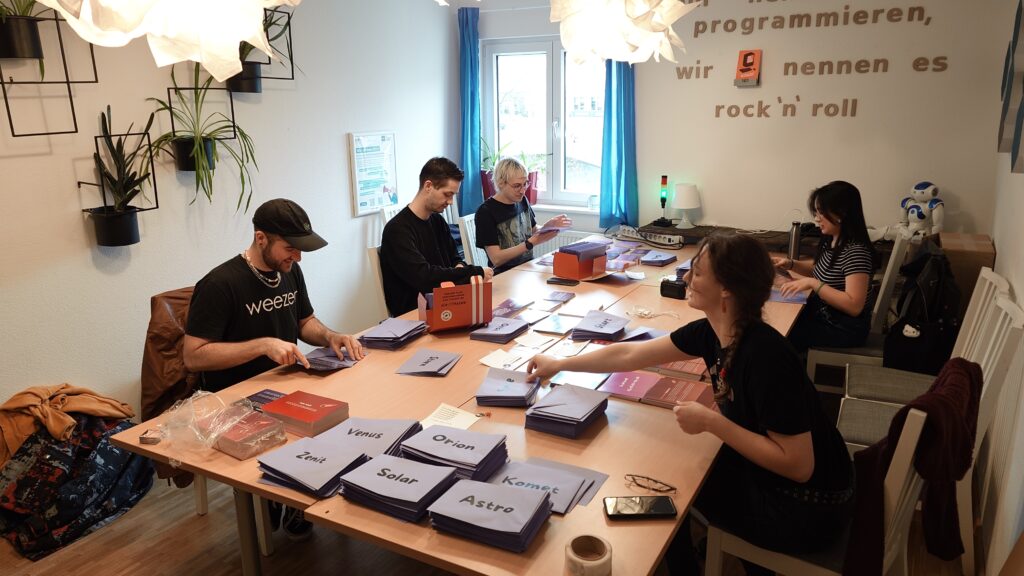
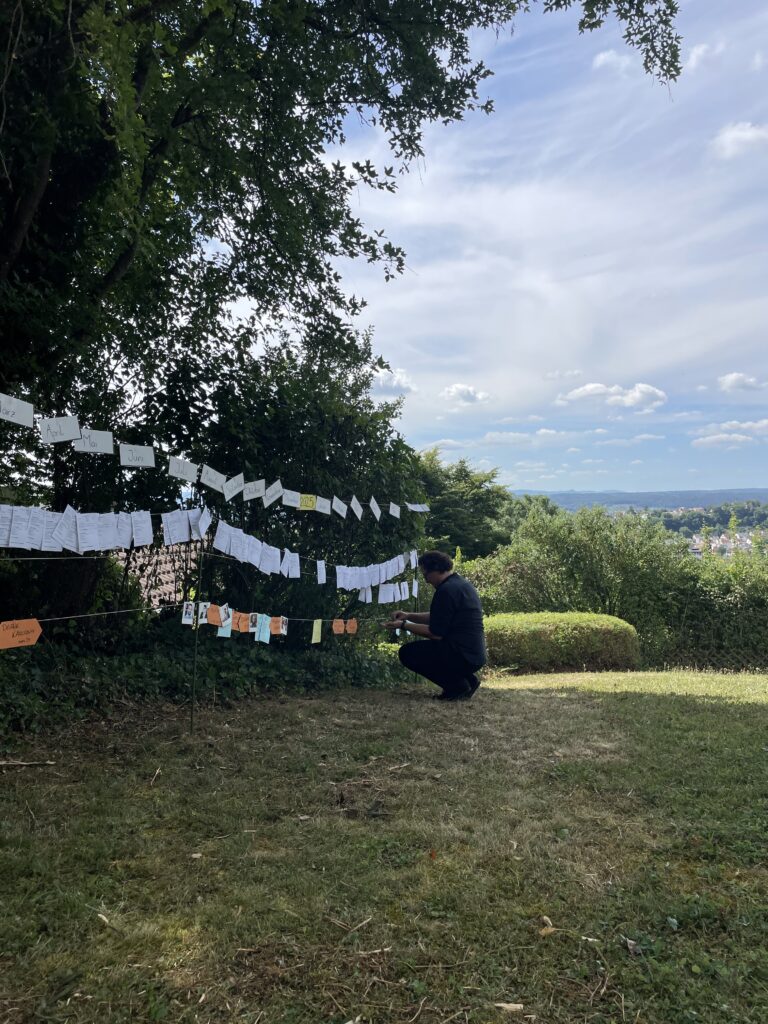
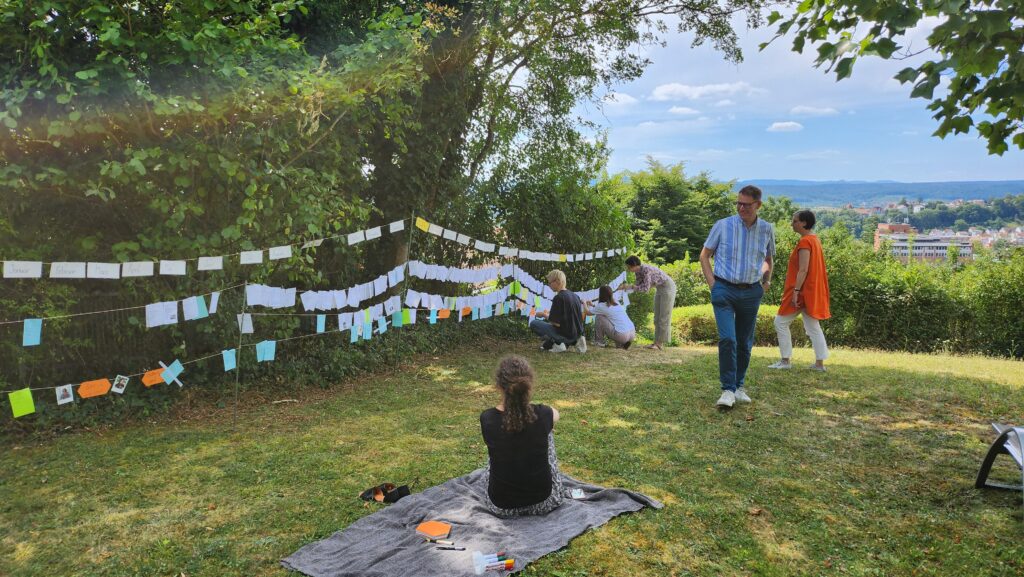
You can read about the stories, which moments these pictures symbolize and what made them so special to the RHET AI members, here:
Anna Köhler (Unit 1)
Rafaela Pfeil (Unit 3)
Bild: Anna Köhler
Michael Pelzer (Unit 2)
Markus Gottschling (Wissenschaftlicher Koordinator, Unit 3)
Photo: Salina Weber
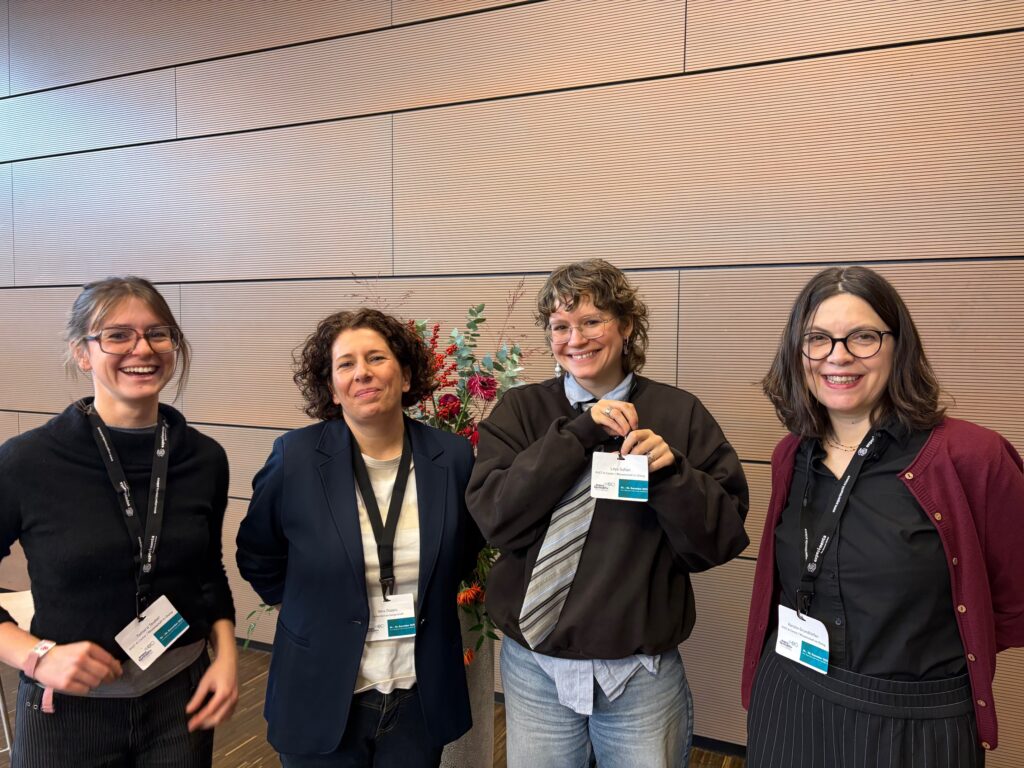
Tamara Teuber, Leya Safiyan, Kerstin Grundhöffer (Wissenschaft im Dialog)
The presentations, performances, and workshops—but also the conversations outside the official conference program—gave us many new ideas to think about. We also had a really nice time with the rest of the RHET AI team. Since we are based in Berlin and rarely visit Tübingen, events like this are always very special for us.
The photo was taken shortly after our presentation, and I think you can still see how excited we all were about the conference!"
Anne Burkhardt (Unit 2)
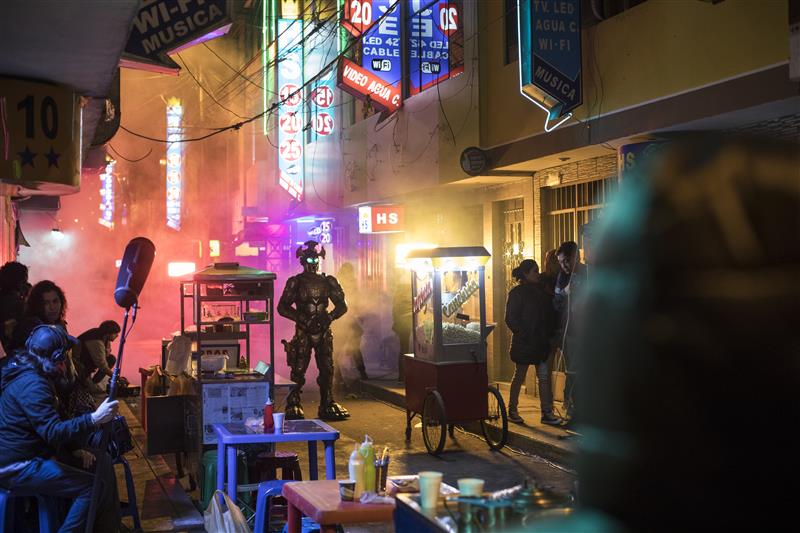
For me personally, this year was all about writing and publishing, including in the context of this study. I was particularly pleased that the article dealing with the interviews I conducted with Latin American filmmakers (directors and/or screenwriters of the 10 selected films) was published in AI&Society. This was the first time I had dared to approach such a 'high-ranking' journal, and it was all the more satisfying that it worked out:
https://link.springer.com/article/10.1007/s00146-025–02577‑3 🙂"
Patrizia Attar (Unit 1)
With this beautiful and personal review, we take our leave of 2025 and look forward to all the new things that await us in 2026. We wish you a Happy New Year and all the best for the coming 12 months!


